Ebook The Republic (Penguin Classics), by Plato
To urge the existence of the book, we support by supplying the internet library. It's in fact not for The Republic (Penguin Classics), By Plato only; identically this book turns into one collection from numerous publications brochures. The books are given based on soft data system that can be the initial means for you to overcome the inspirations to get brand-new life in much better scenes and assumption. It is not in order to make you feel confused. The soft documents of this book can be saved in specific ideal gadgets. So, it can alleviate to check out every single time.
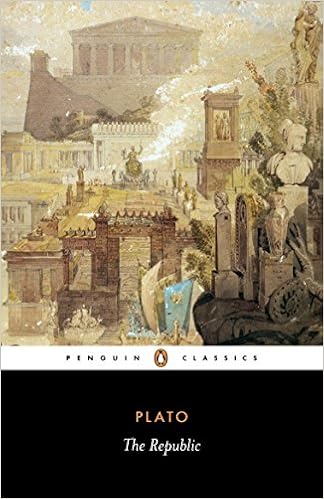
The Republic (Penguin Classics), by Plato

Ebook The Republic (Penguin Classics), by Plato
Review a book to make your life running well, check out a book making your experience boosts without going somewhere, as well as review a book for fulfilling your free time! These sentences are so familiar for us. For individuals who do not like analysis, those sentences will certainly be sort of extremely monotonous words to utter. However, for the readers, they will certainly have larger spirit when a person supports them with the sentences.
The Republic (Penguin Classics), By Plato turns into one of the hundred books that we supply in soft data types. Even this is just conserved, it will certainly make you finish to have a book. It will not make you feel woozy to bring the book alike the extremely book lover. You could just review the soft documents in the device. So, it will make easy for you to read and computer when at workplace as well as residence. The soft file can be copied for some locations as yours.
The reason of many people selects this The Republic (Penguin Classics), By Plato as the reference reveals as a result of the demands in this day. We have some certain means how the books are presented. Starting from the words options, attached topic, as well as easy-carried language style, how the author makes this The Republic (Penguin Classics), By Plato is extremely straightforward. Yet, it features the businesslike that could affect you simpler.
After getting some factors of how this The Republic (Penguin Classics), By Plato, you should feel that it is very correct for you. Yet, when you have no concept regarding this publication, it will certainly be much better for you to attempt analysis this book. After reviewing page by page in only your extra time, you can see exactly how this book will benefit your life.
Plato's The Republic is widely acknowledged as the cornerstone of Western philosophy. Presented in the form of a dialogue between Socrates and three different interlocutors, it is an inquiry into the notion of a perfect community and the ideal individual within it. During the conversation other questions are raised: what is goodness; what is reality; what is knowledge? The Republic also addresses the purpose of education and the role of both women and men as "guardians" of the people. With remarkable lucidity and deft use of allegory, Plato arrives at a depiction of a state bound by harmony and ruled by "philosopher kings."For more than seventy years, Penguin has been the leading publisher of classic literature in the English-speaking world. With more than 1,700 titles, Penguin Classics represents a global bookshelf of the best works throughout history and across genres and disciplines. Readers trust the series to provide authoritative texts enhanced by introductions and notes by distinguished scholars and contemporary authors, as well as up-to-date translations by award-winning translators.
Your recently viewed items and featured recommendations
›
View or edit your browsing history
After viewing product detail pages, look here to find an easy way to navigate back to pages you are interested in.
Product details
Paperback: 480 pages
Publisher: Penguin Classics; New edition (September 14, 2007)
Language: English
ISBN-10: 0140455116
ISBN-13: 978-0140455113
Product Dimensions:
5.1 x 0.9 x 7.8 inches
Shipping Weight: 10.6 ounces (View shipping rates and policies)
Average Customer Review:
4.4 out of 5 stars
854 customer reviews
Amazon Best Sellers Rank:
#184,092 in Books (See Top 100 in Books)
I'm trying to alternate between fun audiobooks and ones that I feel I should read rather than having any desire to do so. Plato's Republic was in that second group. I honestly expected to hate it. But it's one of the fundamental classics. So on the list it goes to listen to while I commute. And I loved it. It may have been that it was a full cast audio but it honestly did feel like being with a group. Maybe a quarter of the way in I realized what it reminded me of: when you are at a very mellow party in college and people start discussing things that are really "deep, man." And there's that one person who is way too into it and dominates the conversation. So that tickled me most of the book. The other thing that was really engaging was how much of the ideas in this book can be seen in the modern world. In that way it made it feel like an anthropological study and it kept making me say, "neat," even when I disagreed with whatever point was being made. Overall I would recommend this audiobook version because it made it come alive.
Whew, that was an intense read! I gave five stars because after careful consideration I realized that Alan Blooms interpretive essay really helped me to understand the The Republic to a different degree. The first ten books are the shoes, the interpretive essay is the shoe lace and it ties all of it up very neatly. To read something over 2,000 years old that’s been translated from Ancient Greek is a task in itself, I commend this translations interpreter he did a stellar job. This book is Heavy and not a book you can just pick up and expect to read in a weekend, its not littered with images that create a perfect picture for you to burn thru, it’s page after page after page of thought, so it slows you down, a lot. Each page forces you to think about what you’re reading, sometimes you have ZERO Idea and that’s ok, that’s where Bloom’s Interpretive Essay comes in. To pick up this book and commit to finishing it is a Challenge I highly recommend, you’ll walk away a better person with a sense of accomplishment and more thoughtful mind. I’ve read over 200 books and I think it’s safe to say that this was the most challenging book I’ve ever put my mind too, if your looking for a challenge then you’ve found it. Happy reading 📖
While the book was written in 380 BCE it is, perhaps, more relevant today than at any time in its history. You would almost think that Plato had pulled a Dr. Who and transported himself to 2018 before sitting down to write. It couldn’t be more tailored to the political, social, and economic environment in which we currently find ourselves.Plato/Socrates use elenctic (i.e. Socratic) questioning to explore human happiness and the specific virtue of justice. Socrates believed: “by curing people of the hubris of thinking they know when they do not…makes them happier and more virtuous than anything else.â€Socrates and his friends pursue this journey by defining the ideal city – Kallipolis—and its rulers and constitution, the idea being that truth is often easier to discern on a large scale (i.e. a city) that can then be applied on a smaller scale (i.e. the individual).The debate focuses on the four virtues of an ideal city—wisdom, courage, temperance, and justice. And results in the conclusion that the human soul is made up of three parts—the appetitive, spirited, and rational—and that virtue, ultimately proven to be the source of happiness exists when the three are in balance and harmony.Socrates ultimately defines five political/economic models—philosopher/king, timocracy, oligopoly, democracy, and tyranny. And he ranks them, from good to bad, in the order listed, essentially arguing that they form an inverse ladder in which one inevitably deteriorates into the latter.That means, in essence, that oligopoly inevitably deteriorates into democracy, which he clearly doesn’t not hold in very high esteem. Freedom, by his logic, is unsustainable. In the simplest terms, the unfettered pursuit of freedom by everyone ultimately leads to conflict and that, in turn, inevitably leads to a race for power defined by manipulation, deception, and injustice.As a result, democracy inevitably leads to tyranny as the ruling class preys—quite deceitfully—on the fears of the masses that they, the masses, are being sidelined and their interests ignored. Sound familiar?The elenctic, commonly known as the Socratic method, has been largely stripped from our political and academic discourse. People are sure of what they know and don’t want to know anything else. The thirst for victory has, as a result, crushed the thirst for knowledge.There are many reasons for this. Technology, which gave rise to the echo chamber, has certainly contributed. Impatience has also played a big role. Elenctic takes time and our collective attention spans have dwindled to near nothing. Education, I believe Plato would say, however, is probably the real culprit. Oppression, sheltering, and victimization have replaced Plato’s definition of the ideal education: physical training, musical training (including prose and speech), mathematics, and dialectic.On the surface, critics will find no shortage of targets in the logic. More than anything else, however, both the argument and any criticism that might be drawn, reflect the imprecision of language itself and the difficultly this presents for philosophers willing to tackle the biggest and most relevant issues of life.That, however, simply reinforces Plato’s encouragement to ask more questions, listen more attentively with an open mind, and never assume you know the real answer. Which is why his ultimate encouragement it seems to me is not to admire things that are beautiful or just, but to truly understand what beauty and justice are. Sadly, I can think of no leader today who is doing anything even remotely close to that.Read it. It will make you a better leader, citizen, parent, friend, and person.
Plato’s Republic (Greek: Πολιτεία, Politeia; Latin: Res Publica) was written in 380 BC and this version was translated by Benjamin Jowett in 1871. It is a fiction book in the format of a discussion between Socrates and others. It aims to debate and conclusively determine the meaning of Justice. Socrates, the main character, was a Greek philosopher and the mentor of Plato. His philosophy is the basis and origin of the western philosophy. As a high schooler who often debates similar ideals and questions, I found this book to be very eye-opening and fascinating. Socrates doctrine proves itself true even in this day in age. That just goes to show, when it comes to ideals and behavior, humans haven’t changed very much. Republic is very well written and even after thousands of years it still captures its audience with its provoking revelations and relatable content. If you often find yourself debating similar questions then you might just find your answers here, but if you dislike philosophy or are set in your ways you probably will not find this book to be interesting. For me, this book was an enjoyable challenge and I definitely would read it again.
This Kindle edition is not as advertised and entirely useless. First and foremost, it is absolutely not an annotated edition; there is not a single note anywhere in the text. For that matter, there are no Stephanus numbers—the universal page numbers for all editions of Plato—so you will never be able to either cite this edition or find anything referred to by other writers. I'm not even sure that this is the Reeves/Grube translation, as there is no publication information whatsoever. Avoid this like the Athenian plague.
The Republic (Penguin Classics), by Plato PDF
The Republic (Penguin Classics), by Plato EPub
The Republic (Penguin Classics), by Plato Doc
The Republic (Penguin Classics), by Plato iBooks
The Republic (Penguin Classics), by Plato rtf
The Republic (Penguin Classics), by Plato Mobipocket
The Republic (Penguin Classics), by Plato Kindle